
';
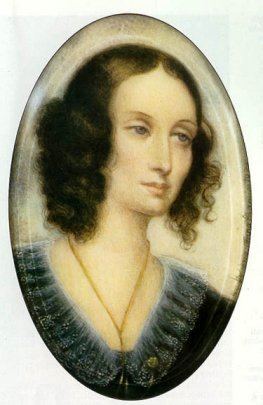

Jane Wilhelmina Stirling (15 July 1804 – 6 February 1859) was a Scottish amateur pianist who is best known as a student and later friend of Frédéric Chopin; two of his nocturnes are dedicated to her. She took him on a tour of England and Scotland in 1848, and took charge of the disposal of his effects and manuscripts after his death in 1849. While there is no evidence they were lovers, she was often referred to, after Chopin's death, as "Chopin's widow".
Bibliothèque Nationale, Paris Res. Vma 241
Bibliothèque Nationale, Paris Res. Vma 241
Born 22 October 1828 - Paris
Died 10 February 1907 - Paris, age at death: 78 years old
Pianist
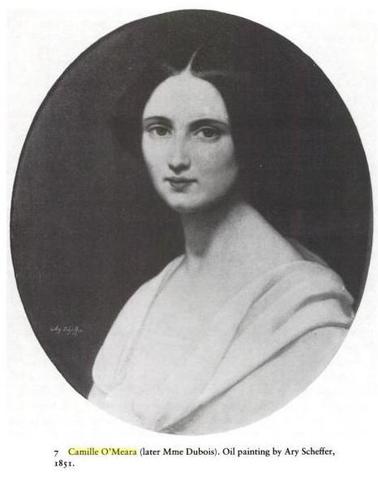
"French pianist of Irish extraction, and a student of Kalkbrenner and Chopin (1843-1848).
She was a preferred student of the composer Frédéric Chopin in the latter part of his life. He died in 1849.
Her portrait was painted by Ary Scheffer (1851). " [Source: Eigeldinger, "Chopin vu par ses eleves", pp. 212-14]
Married M. Charles Dubois.
BNF RES. F. 980 (DUBOIS)
BNF RES. F. 980 (DUBOIS)
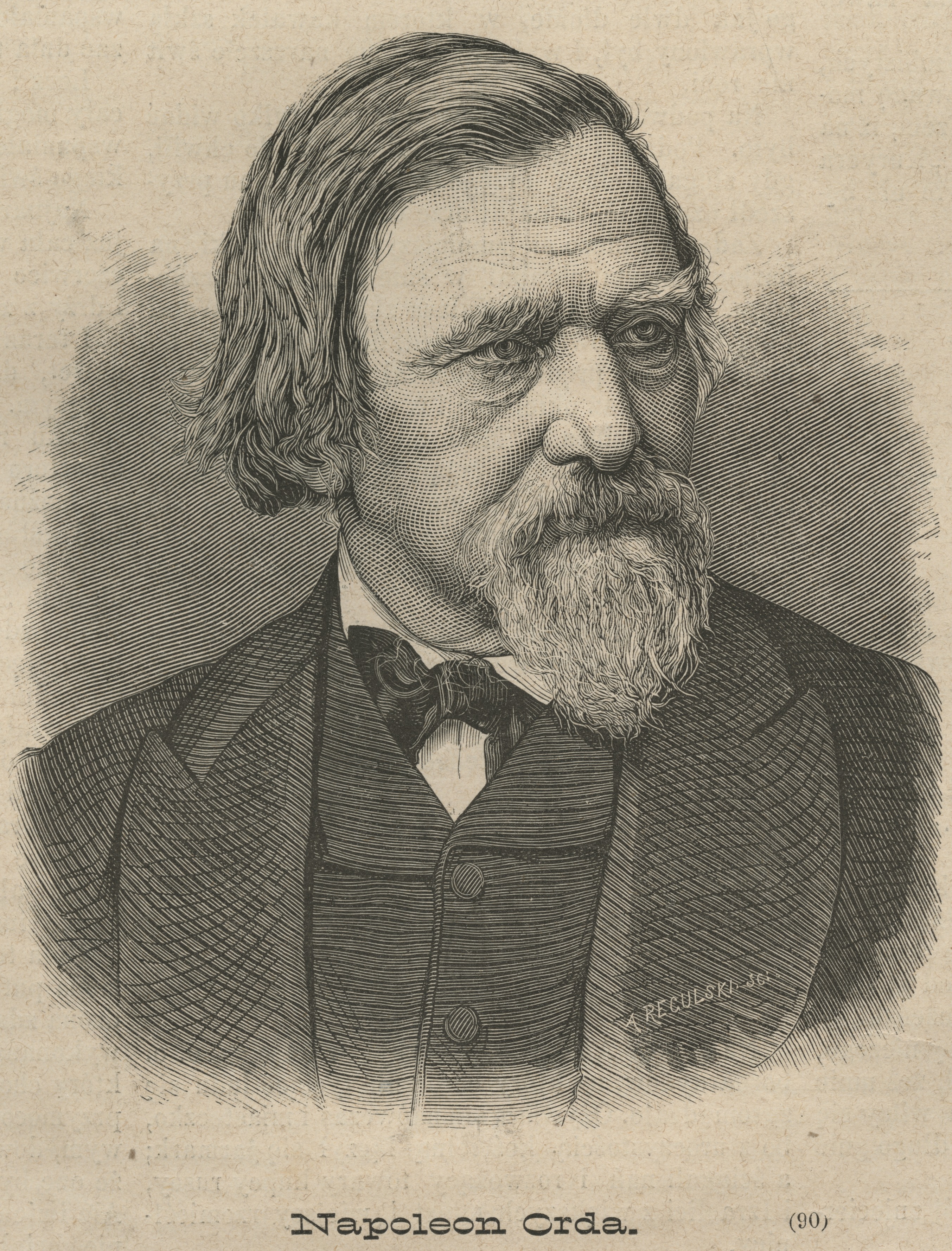
Napoleon Mateusz Tadeusz Orda (Belarusian: Напалео́н О́рда; February 11, 1807 – April 26, 1883) was a Polish-Lithuanian[1][2] musician, pianist, composer and artist, best known for numerous sketches of historical sites of present-day Belarus, Ukraine, Lithuania, and Poland.
Contents
1 Biography
2 Commemoration of Orda in Belarus
3 Gallery
4 References
5 External links
Biography
Napoleon Orda was born in the village of Worocewicze in the Pinsky Uyezd of Minsk Governorate in his father's manor.[3] His father, Michał Orda, was an impoverished noble of Lithuanian ancestry and the marshal of the powiat of Kobryn. After finishing Svislach gymnasium in 1823, he started mathematical studies at the Imperial University of Vilnius. However, his university career came to an end on August 27, 1826, when he was arrested by the Russian secret police for taking part in a secret student society "Zorzanie",[4][5][6] which was active in Svislach and Białystok gymnasiums.[7] Although he was released soon afterwards, he was expelled from the university and was not allowed to continue his studies.
M/610 (ORDA)
M/610 (ORDA)
Ludwika Jędrzejewicz (Polish: [ludˈvika jɛndʐɛˈjɛvitʂ]; née Chopin; 6 April 1807 – 29 October 1855) was the elder sister of Polish composer Frédéric Chopin. Ludwika was born in Warsaw, Poland, in 1807, the daughter of Nicolas Chopin and his wife Justyna.
From a young age, she showed talent for music and literature. Like her brother Frédéric (b. 1810), she studied music with Wojciech Żywny.[1] In 1825 Frédéric wrote to his friend and schoolmate Jan Białobłocki "Ludwika has composed a perfect mazurek, of a kind that Warsaw has not yet danced to."[1]
When her brother emigrated to Paris in 1830, they wrote one another extensively, and she visited him on one occasion. Later, when Frédéric's health had begun to deteriorate rapidly, he requested that Ludwika come and stay with him. She arrived in Paris on 8 August 1849 with her daughter and husband, lawyer Józef Jędrzejewicz, but her husband soon left. Ludwika was with Frédéric when he died on 17 October 1849.[2]
After Ludwika's second trip to Paris, her marriage with Jędrzejewicz began to deteriorate. Her husband accused her of putting her family before everything else, and for many years Jędrzejewicz treated Ludwika badly. This continued until Jędrzejewicz's death in 1853.[1]
Ludwika died in her home in Warsaw during an 1855 epidemic of the plague.
M174/M176 (JĘDRZEJEWICZ)
M174/M176 (JĘDRZEJEWICZ)
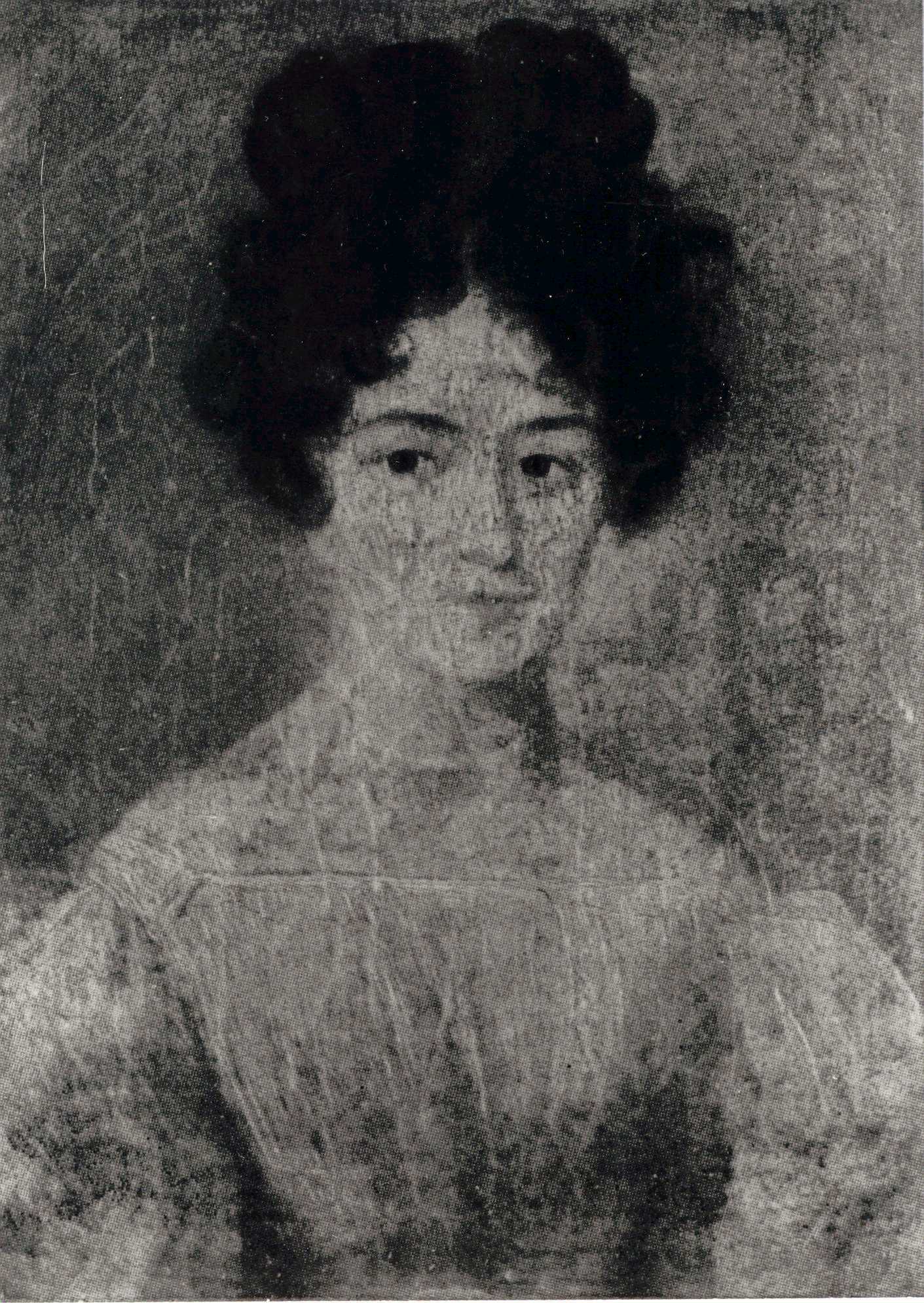
Zofia Rosengardt-Zaleska (1824–1868) was the daughter of the Napoleonic officer Józef Rosengardt and his wife Józefa, née Bańkowska (in the literature, misspelled ‘Bońkowska’).
Her father (1793–1866), son of Franciszek, was born in Opava, in Czech Silesia. On completing his studies at Cadets’ School, he joined the cavalry and served in the Russian campaign of 1812; in Vilnius, he was taken captive, then released in 1814. Assigned to the Staff of the General Quartermaster Department of the Polish Army, he advanced to the rank of lieutenant, then captain. After the fall of the uprising, he was assigned to Registration and Recruitment in the Veterans’ Corps, from which he resigned, in 1835, due to a second paralysis (the first had occurred in 1828). In the literature, he has been wrongly identified with the well-known Warsaw hotelier and restaurateur Konrad Rosengardt, owner of the Hotel Wileński in Warsaw, among other properties, which was famed for its excellent cuisine (‘dumplings à la Rosengardt’).
Doubtless on account of her husband’s invalidity, the responsibility of keeping the family fell to Zofia’s mother, who, burdened with four daughters (their son had died in childhood), struggled financially. For that reason, at least one of the daughters, Zofia, spent three years in the countryside, away from her family. She had some ties with Bytom. Despite the financial difficulties, the musically gifted Zofia received a suitable training; her teacher was Wojciech Żywny.
In Warsaw, Zofia maintained close contacts with Chopin’s family, particularly with his sisters. In May 1843, she left for Paris, in the hope that letters of support from Chopin’s sisters would enable her to receive lessons from the maestro, yet she had to wait six months for her first meeting with Chopin.
In Paris, she found herself in the milieu of the Great Emigration, where she met such figures as Adam Mickiewicz, Juliusz Słowacki, Klementyna z Tańskich Hoffmanowa and Stefan Witwicki. It was Witwicki who put her in touch with the composer.
The first lesson took place in November 1843. By mid March the following year, there had been ten lessons, occurring on average once a month. During this time, Zofia met Józef Bohdan Zaleski (1802–1886), whom she married in November 1846, and Chopin was a witness at their wedding. For some time, the couple lived in Hyères, in the south of France, then in Fontainebleau, and subsequently in Paris. They spent the summer of 1847 in Rome, where they met with the poet Cyprian Kamil Norwid. They had six children, two of which died very early.
She left a diary, which is a valuable source for Chopin’s biography. Among other things, we learn from it that she harboured secret dreams of marrying Chopin. Zofia describes her teacher’s personality and behaviour in everyday situations from the perspective of a pupil of an adored master. In tracing a colourful portrait of Chopin, she brings into relief his sensitivity and also his mood swings and stormy temperament. She did not pursue a musical career. She died in 1868.